

Neko
Neko is designed to study color theory.
I built Neko’s predecessor, Nila, to paint in black and white. When I tried to graduate her to color, I realized I did not know enough about how to use it.
Neko is built to algorithmically select colors for his palette.
Studio Posts Tagged #neko

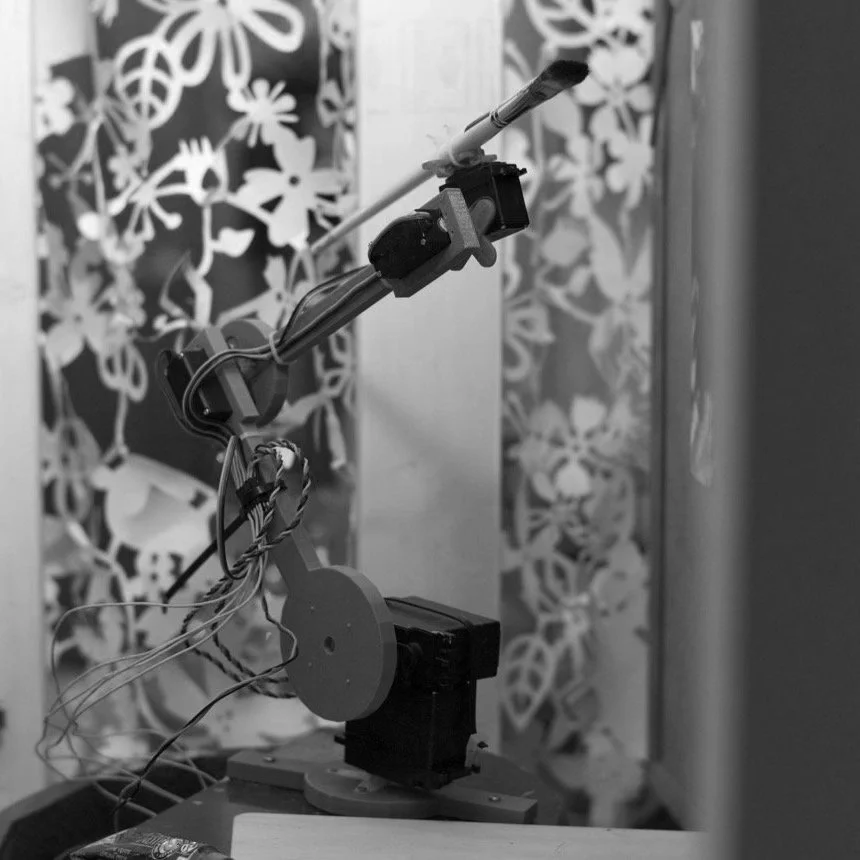


How I Built Neko
In January 2012 I got my first 3D printer, and Neko was my first major project.
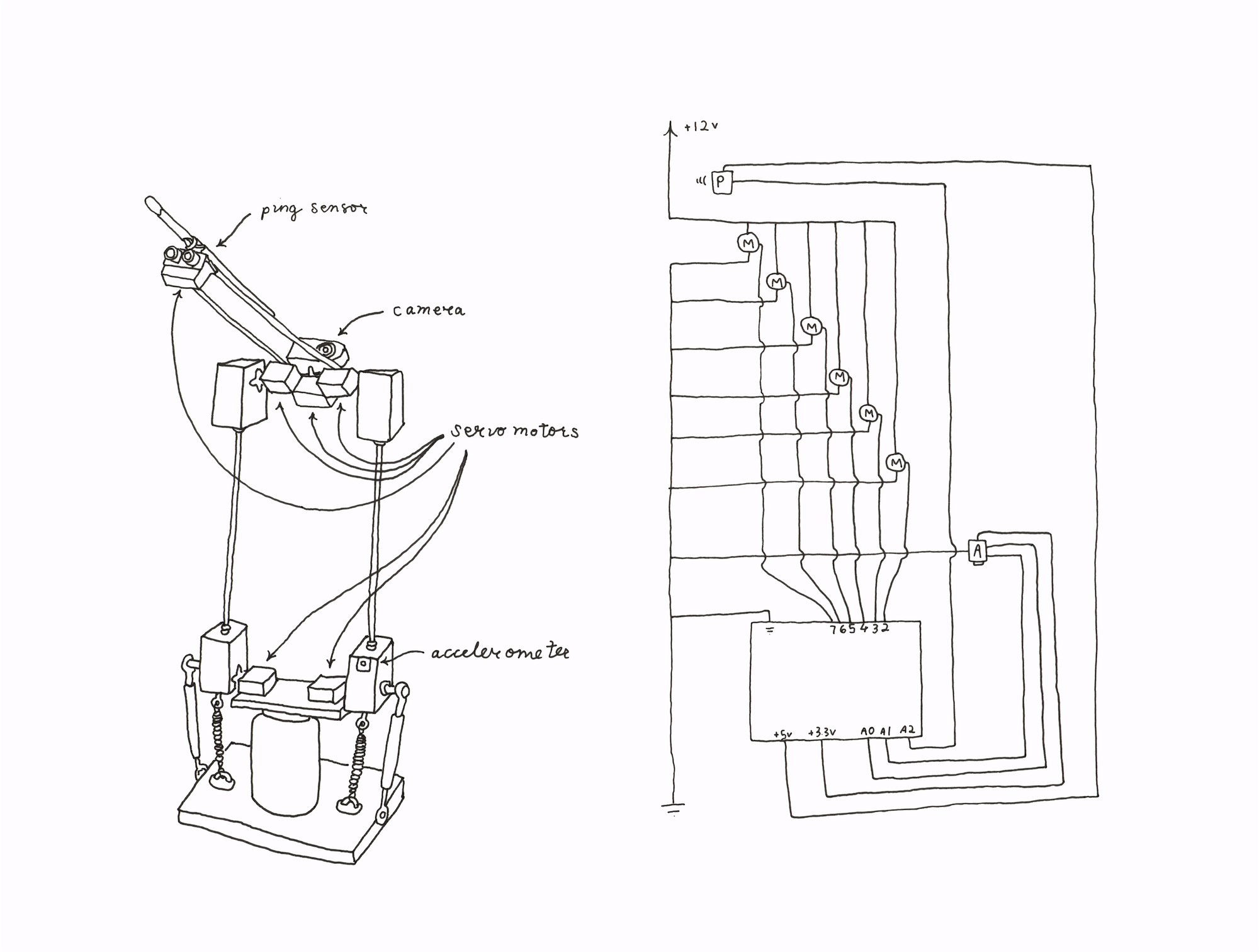
First, I drew a diagram of how I wanted things to fit together: the parts I’d sourced from Gartner Hardware, the electronic components from Sparkfun, and the parts that would need 3D printing.
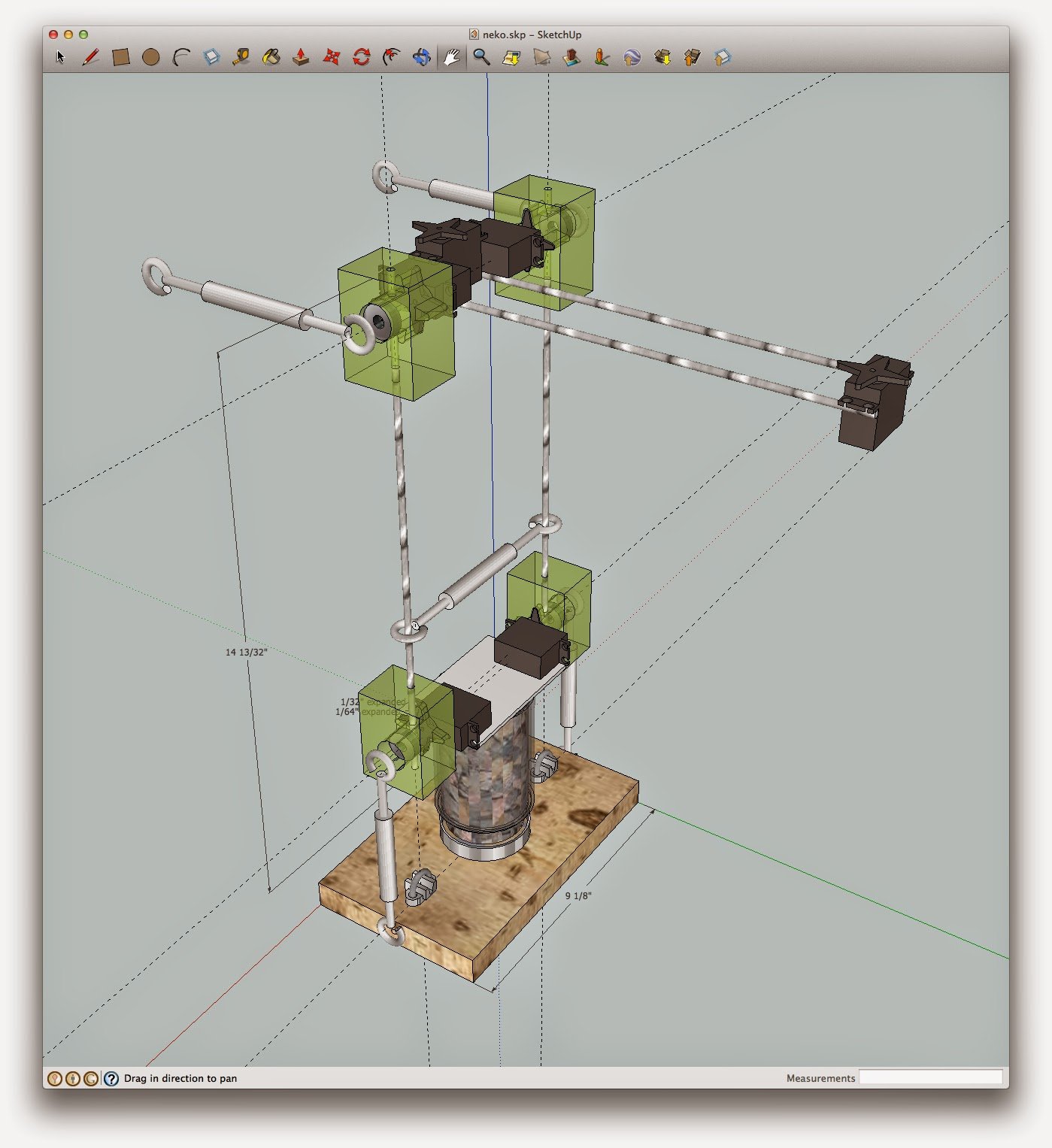
Next, I used SketchUp to precisely model the parts I’d need to print. I also accounted for the jar of stones I’d decided to use as a grounding counterweight.

Here I am printing a test butt after assembling my Thing-O-Matic. You can also see the Red-Yellow-Blue pigment studies I’d been working on at the time.
Original Notes
Robots tend to fall in three categories: arms, rovers and androids. Since painting is a sedentary act requiring grace and precision, and I'm more interested in exploring the robotic experience than simulating the human experience, an arm-type robot is the obvious choice. This arm has twice the dexterity of Nila, my first oil painting arm, and a more ambitious goal of lifelike representation with sound color theory. I have a ten-step lesson/development plan:
Grabbing the brush
Dipping the brush in paint
Applying lines
Blending color
Grayscale representation
Color blocking
Diluted layers
Sculptural strokes
Color representation of still image
Color representation of image over time
This is a pretty standard human trajectory, a synthesis of my own formal lessons and private study, divied suitably for a robot. Each step sees a modest increase in complexity of both the hand and eye.